
Identity Shift of Becoming a Father and the Grief Nobody Talks About
There's a moment that a lot of new fathers describe where they're holding their baby, or watching their partner sleep, or standing in the kitchen at 3am, and the thought arrives uninvited: who am I now?
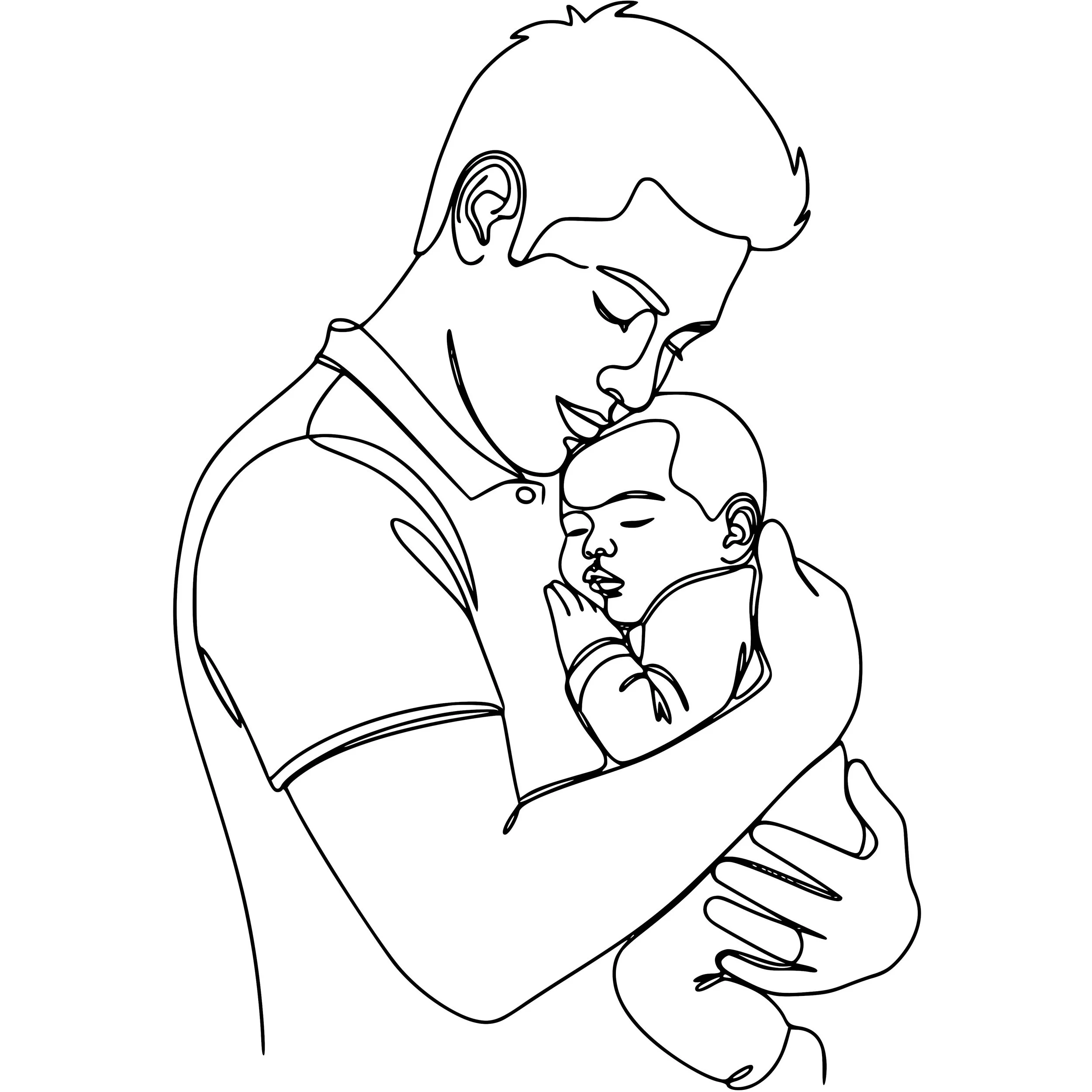
They usually feel ashamed of the question. Isn't this supposed to be the happiest time of your life? Isn't this what men are supposed to want? And so the question gets pushed down and labeled ingratitude, and they carry it quietly while performing competence and providing and being present and doing all the right things.
I want to name that question clearly: it is not ingratitude. It is grief. And it is one of the most underacknowledged clinical presentations I see in my work with men.
The Concept of Matrescence (and Why Fathers Need Their Own Word for It
There's a term in the psychological literature called matrescence, coined by anthropologist Dana Raphael, describing the profound identity transformation women go through when they become mothers. It's neurobiological, psychological, relational, and existential all at once. It's now getting real clinical attention.
There's no equivalent term for fathers. Which is itself telling.
But the transformation is real for men too, even if it's less documented. Researchers studying paternal brain changes have found structural and functional shifts in areas associated with social cognition and caregiving. The body knows something has changed even when the mind is still trying to catch up. And the psychological dimension, the shift in identity, relationship structure, freedom, sense of purpose, and where you fit in the world, is enormous.
What Gets Grieved
When I sit with new fathers in therapy, the losses they're grieving usually fall into a few categories, and none of them are about not loving their child. The most common thing I hear is a version of: I miss myself.
They miss the freedom of being answerable only to themselves. They miss the spontaneity. They miss the relationship they had with their partner before a third person reorganized everything. They miss having clear expertise at something, the competence they'd spent years building at work or in their hobbies or in their relational life, now replaced by the crushing uncertainty of early parenthood.
Some men grieve the father they expected to be versus the one they're finding themselves to be. They had an image, often partly inherited from their own father's presence or absence, of who they would be in that role. And then reality arrived and it didn't match.
Some are grieving parts of their childhood that the baby has reactivated. This is especially true for men who had painful or absent fathers. The baby cracks open old rooms.
Why Men Rarely Name It as Grief
Grief requires an acknowledged loss. And here's the problem: men are not supposed to have lost anything. They gained something. They should be grateful. The cultural script for new fatherhood is oriented entirely toward what you're adding to your life, not what's being permanently altered.
When you name a loss in that context, especially a loss that is implicitly about yourself and your own needs, it feels like a character flaw. So men don't name it. They describe it as burnout or stress or being checked out. Or they don't describe it at all.
I think this is one of the places therapy, and specifically men's group therapy, can do some of its most important work. Because when a man hears another man say the thing he's been ashamed to say, and sees that man still be respected, still be seen as a good father, still be a full person, something shifts. The shame loses some of its grip.
What Integration Looks Like
The goal is not to get back to who you were before the baby. That person is gone. The work is to grieve him, to actually mourn what has changed, and then to figure out who this version of you is becoming. That's slower than people want it to be. It often takes longer than the first year. It requires honesty about what you're feeling with at least one other person.
I work with fathers on this in individual therapy and in my men's group. If you're in that fog right now, the one where you love your kid and also feel like a stranger to yourself, you're not broken. You're in a real transition. And you don't have to move through it alone.
Reach out at david@witnessingyou.com or book a consult at calendly.com/witnessingyou/15min-consult.